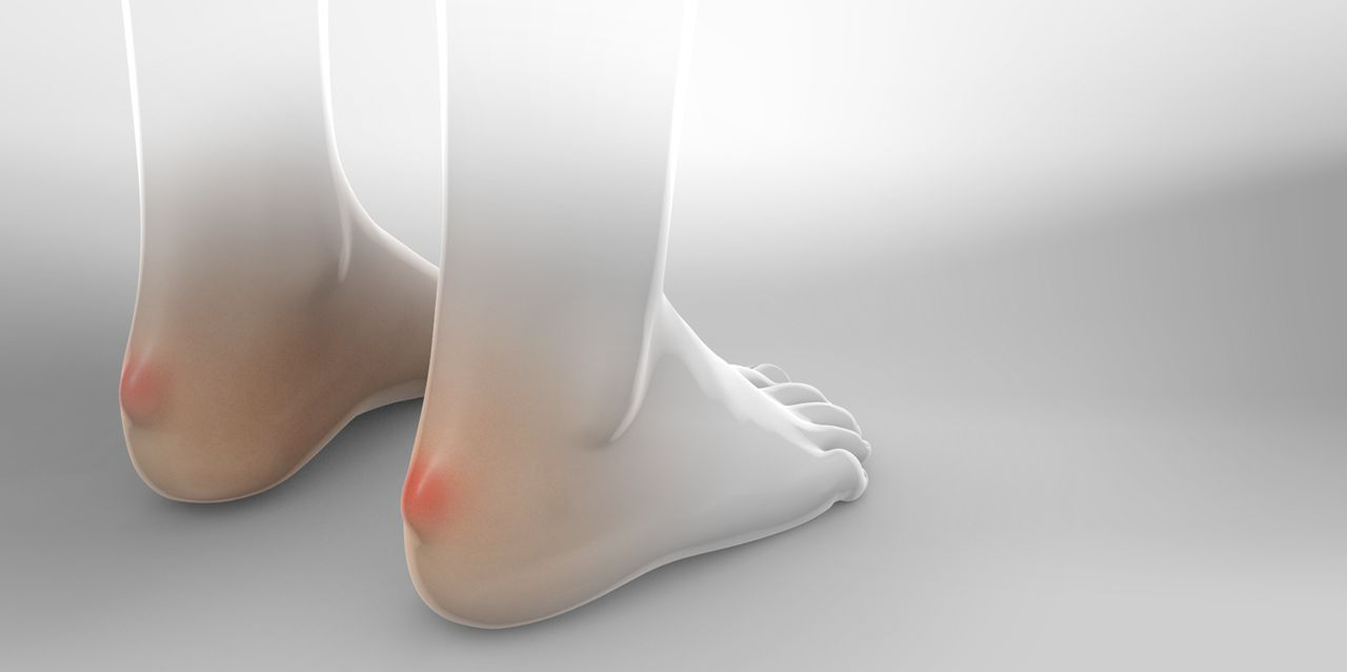

Our feet and ankles carry the weight of our entire body every single day, yet most people dismiss foot pain as "just tiredness" until it becomes impossible to ignore. Left untreated, many minor foot and ankle issues progress into serious conditions that eventually require surgery.
If you're experiencing any of the following 10 early signs, it's time to stop waiting and book an appointment with a Foot & Ankle Specialist.
1. A Bony Bump Forming at the Base of Your Big Toe
If you've noticed a bump gradually forming at the base of your big toe, along with redness or pain while walking, this could be an early sign of a bunion needing Hallux valgus correction. In the early stages, wider footwear and padding may help, but as the deformity progresses, bunion treatment and cosmetic foot surgery may become necessary. Many patients today opt for minimally invasive bunion surgery, which offers smaller incisions and faster recovery.
Cosmetic foot surgery can help address more advanced bunion deformities when conservative measures are no longer sufficient.
2. Toes That Curl or Bend Abnormally
When your second, third, or fourth toe starts to bend downward at the middle joint and no longer lies flat, it's a classic sign of hammer toe. Ignoring it can make the deformity rigid over time. Early hammer toe correction prevents the need for more invasive procedures later and keeps your toes flexible and pain-free.
3. Recurring Corns and Calluses
Thick, hardened skin that keeps returning on your toes or the sole of your foot isn't just cosmetic; it usually points to abnormal pressure or an underlying foot deformity. Proper corn and callus treatment addresses the root cause rather than just removing the surface buildup, which is especially important for people with diabetes to prevent complications.
If you also have diabetes, it's worth reading about diabetic foot care as well.
4. Burning or Tingling Sensation Between Your Toes
A sharp, burning pain or a feeling like there's a pebble stuck between your third and fourth toes, especially while walking, is a hallmark symptom of a pinched nerve in the foot. Morton's neuroma treatment, when started early, can often resolve the issue with non-surgical options like footwear changes, orthotics, or injections, avoiding the need for surgery altogether.
Dr. Harsh Vyas can help you determine which approach is right for you.
5. Persistent Pain in the Ball of Your Foot
If standing or walking for long periods causes a dull, aching, or burning pain under the ball of your foot, you may be dealing with metatarsalgia. A specialist can offer targeted metatarsalgia treatment, including custom orthotics and gait correction, to relieve pressure on the affected area.
6. Your Foot's Arch Is Flattening Out
A gradually collapsing arch, along with fatigue or aching after standing or walking, is often the first sign of a condition needing flat foot treatment. When this develops in adulthood, it's known as adult acquired flatfoot, and if left unaddressed, it can progress into a more severe condition called progressive collapsing foot deformity.
Timely arch pain treatment, and in advanced cases flatfoot reconstruction surgery, can restore normal foot alignment and function.
7. Sharp Heel Pain First Thing in the Morning
That stabbing pain in your heel the moment you take your first steps out of bed is one of the most classic symptoms of plantar fasciitis. It's sometimes accompanied by a bony growth needing heel spur treatment as well.
Getting proper heel pain and plantar fasciitis treatment early can prevent the condition from becoming chronic and difficult to manage.
8. Stiffness or Pain Just Above Your Heel
Pain, stiffness, or swelling in the back of your ankle, just above the heel, often signals an issue with the Achilles tendon. This is one of the most commonly overlooked injuries, and if ignored, it can lead to a partial or complete tendon tear requiring Achilles tendon injury treatment or surgical tendon repair.
This type of injury is common among athletes and is covered under sports injury treatment .
9. Frequent Ankle Sprains or a Feeling of Giving Way
If your ankle rolls or gives way frequently even on flat surfaces, it's a strong sign of chronic instability. Don't wait until a minor sprain turns into a major injury; consult an ankle sprain specialist promptly.
Repeated sprains weaken the ligaments over time, often requiring ankle ligament repair, ligament reconstruction, or ankle instability surgery to restore stability. In many cases, ankle arthroscopy allows for precise diagnosis and minimally invasive treatment.
10. Ongoing Ankle Swelling, Stiffness, and Reduced Movement
Persistent swelling, stiffness, and a noticeable reduction in how far you can move your ankle are often signs of joint damage needing ankle arthritis treatment. Early on, options like PRP injection for foot pain or hyaluronic acid injection ankle may offer relief.
In more advanced cases, a specialist may recommend ankle fusion or ankle replacement surgery to restore mobility and eliminate pain.
A Special Warning for Diabetic Patients
If you have diabetes and notice any wound, sore, redness, or swelling on your foot, no matter how small, seek help immediately. Delayed diabetic foot ulcer and infection treatment can quickly progress into Charcot foot, a serious deformity, and in severe cases may even require limb salvage surgery to save the limb.
Signs to Watch for in Children
Foot and ankle problems aren't limited to adults. Conditions requiring pediatric flatfoot treatment, intoeing correction, toe walking treatment, and congenital clubfoot treatment are far easier to correct when identified and treated early in childhood.
When Should You See a Foot & Ankle Specialist?
- Pain that lasts longer than two weeks
- Increasing difficulty walking or standing
- Swelling that doesn't subside
- A wound that won't heal, especially in diabetic patients
- Recurring injuries or repeated ankle sprains
- Visible changes in foot or toe shape
For these situations, modern treatment options such as foot reconstruction surgery, foot ligament repair, and complex trauma care offer faster recovery times and better long-term outcomes than ever before.
Small, nagging foot and ankle symptoms are your body's early warning system and ignoring them almost always leads to bigger problems down the road. The good news is that most conditions can be treated effectively without surgery when caught early.
If you recognize any of these 10 signs, don't wait for the pain to become unbearable. Schedule a consultation with Dr. Harsh Vyas at Apex Foot & Ankle Center, Ahmedabad, today.